

Every excavation starts with the same question: what is already in the ground? Gas, power, water, sewer and fiber lines often run within a few feet of each other, and maps are rarely exact. Experienced underground utility locating contractors combine several tools and methods to find those lines before digging and to keep them safe while work is under way. This guide explains how the process works, from the one-call ticket to exposing a line with vacuum excavation.
Step One: The 811 One-Call Ticket
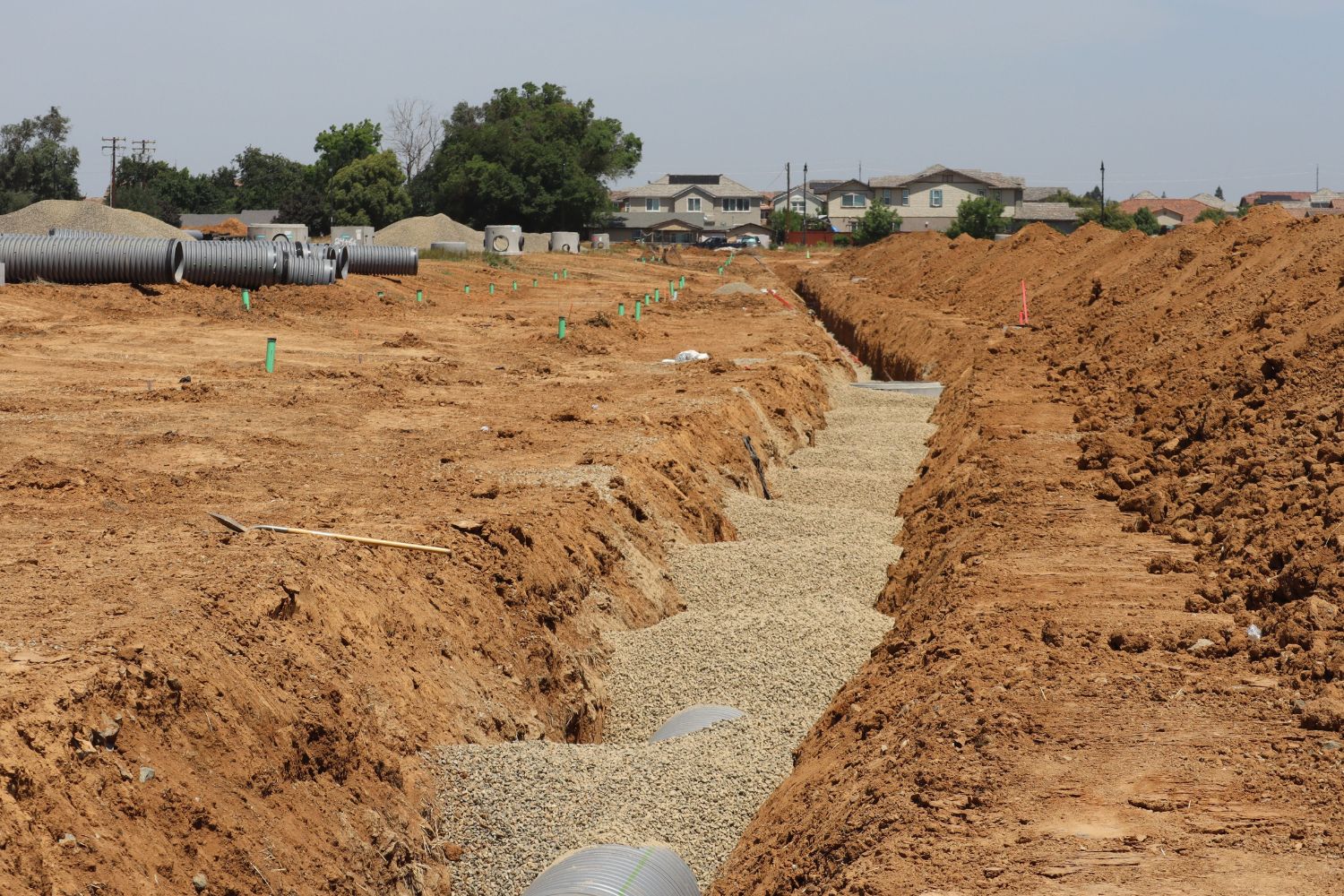
Before any digging, the excavator contacts the state one-call center through 811 [1]. The center notifies member utilities, which send locators to mark their lines on the surface within the required time. Federal excavation rules also require employers to determine the approximate location of underground installations before opening the ground [2].
One-call marks cover lines owned by member utilities, usually up to the meter or service point. Private lines, such as power to a detached building, irrigation, private water lines or site lighting, are often not marked. That gap is where private underground utility locating contractors come in.
Reading the Marks: The Color Code
Marks follow a uniform color code used across the US:
- Red: Electric power lines, cables and conduit.
- Yellow: Gas, oil, steam and other gaseous or flammable material.
- Orange: Communications, alarm and signal lines, cable and fiber.
- Blue: Potable water.
- Green: Sewers and drain lines.
- Purple: Reclaimed water and irrigation.
- Pink: Temporary survey marks.
- White: Proposed excavation.
Tools Underground Utility Locating Contractors Use
Electromagnetic Locators
The workhorse of locating. A transmitter puts a signal on a metallic line, either by clamping or connecting directly to it or by inducing a signal from above, and a receiver traces the line and estimates depth. Passive modes pick up signals already present on live power lines.
Tracer Wire and Sondes
Plastic pipe cannot carry a signal on its own, so it is often installed with a tracer wire. Where there is no wire, a small transmitter called a sonde can be pushed through the pipe and followed from the surface.
Ground Penetrating Radar
GPR sends radar pulses into the ground and records reflections, which can reveal non-metallic pipes and voids. Results depend heavily on soil: dry sand works well, while wet clay limits depth.
Records and As-Builts
Utility maps, as-built drawings and previous locate tickets guide the search, but they are treated as clues, not proof, because records are often incomplete or offset.
Confirming With Exploratory Excavation
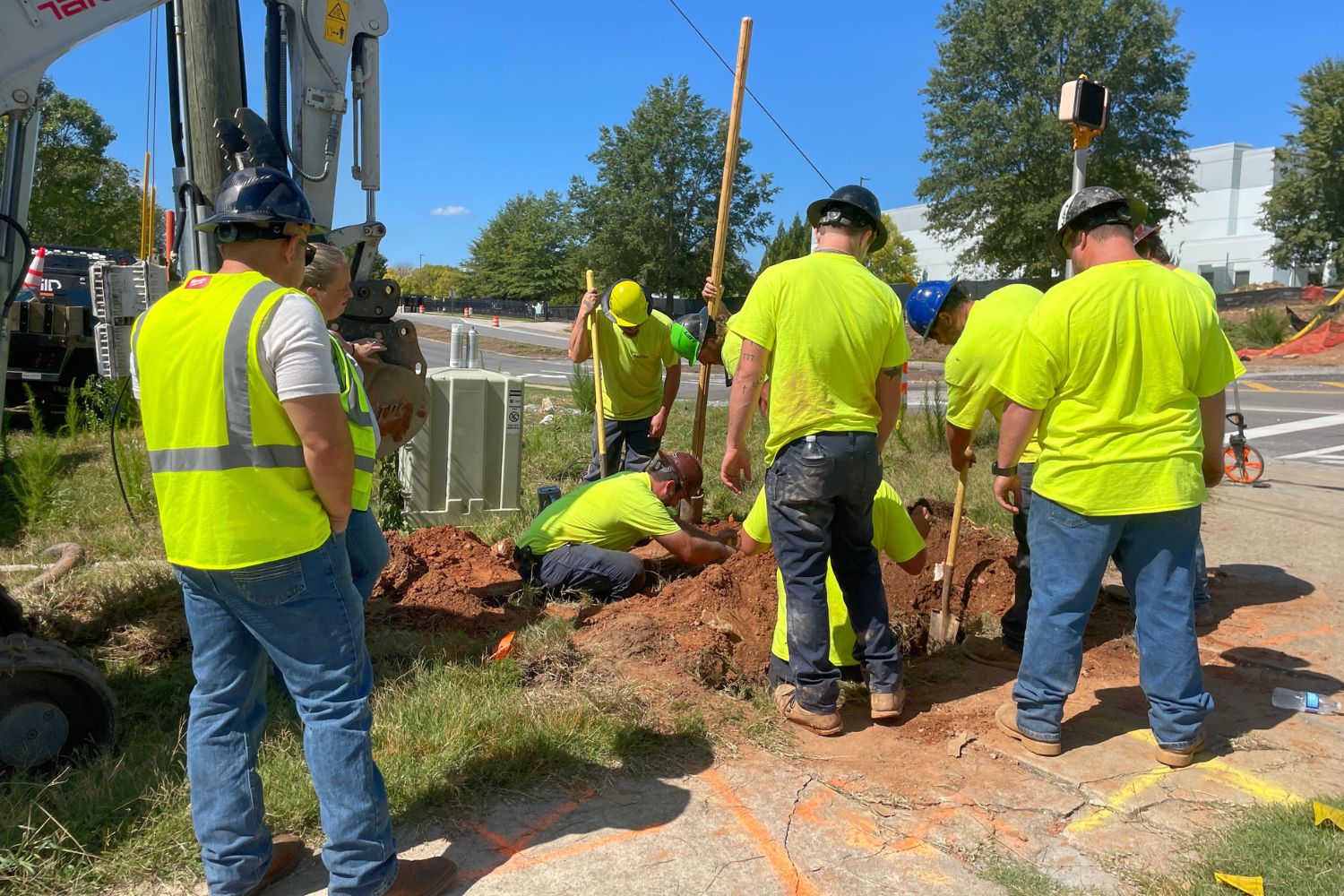
Surface marks show approximate locations. To know exact position and depth, crews expose the line with exploratory excavation, usually by vacuum excavation, also called potholing or daylighting utilities. Our guide to utility potholing and why it matters before digging explains the process, and Fortress Underground’s HydroVac services handle this work safely around live lines.
During Excavation: Staying Safe in the Tolerance Zone
State laws define a tolerance zone on either side of a marked line, commonly between 18 and 30 inches depending on the state. Inside it, crews use hand tools or vacuum excavation rather than mechanical buckets. The Common Ground Alliance’s best practices [3] set out widely used rules.
- Keep marks visible, and request a re-mark if they fade or are disturbed.
- Expose and support lines that cross an open trench.
- Stop and call if an unmarked line appears.
- Report any contact with a line, even if there is no visible damage.
Documenting What You Find
A locate is only useful if the information survives. Good crews photograph marks, record the depth and position of every exposed line, note any utilities that were not on the maps and share the results with the design and construction teams. Those records speed up future work on the same site and reduce the chance that the next crew repeats the same search.
Why Experience Matters
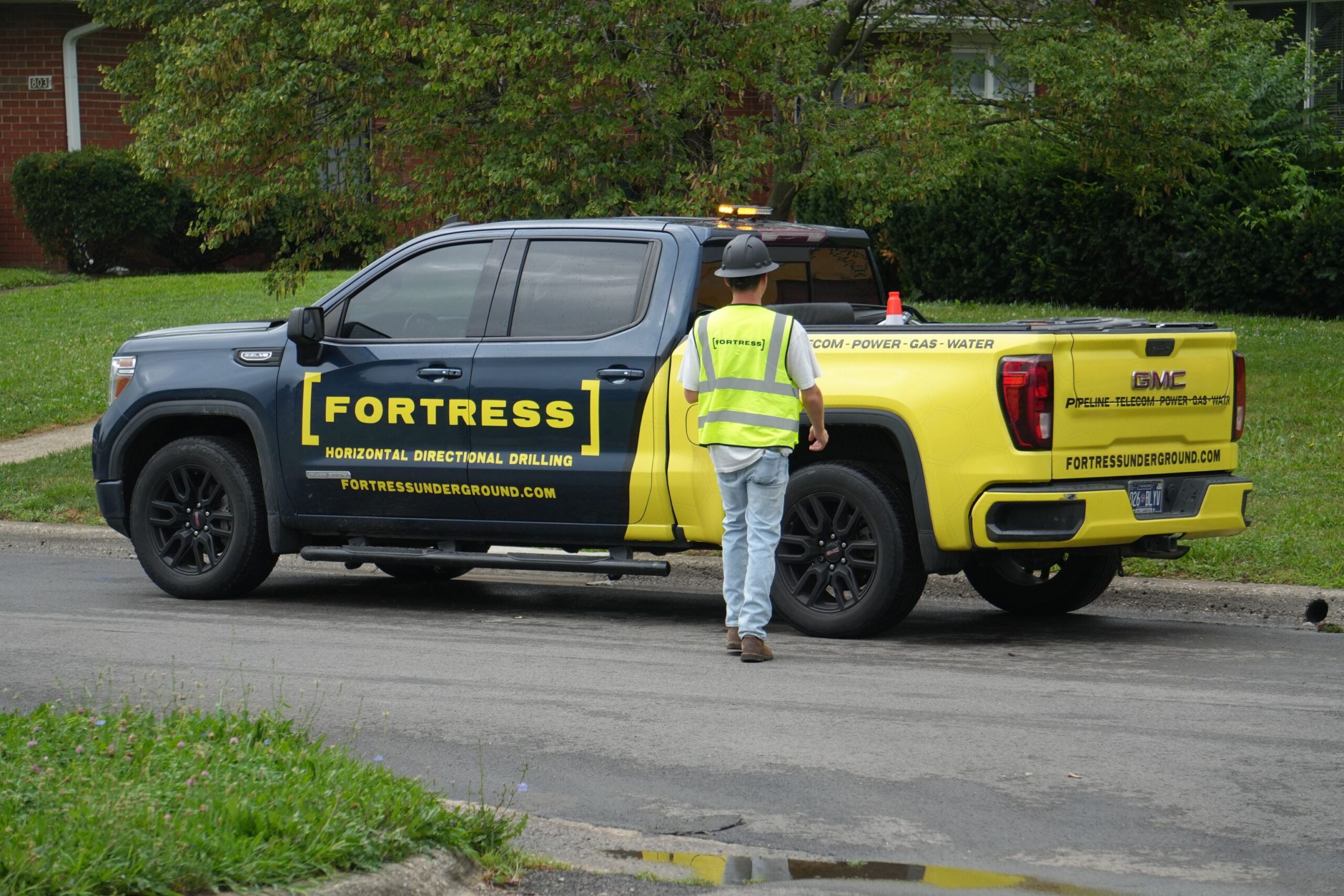
Signals bleed between parallel lines, congested corridors confuse readings, and depth estimates can be off. Experienced underground utility locating contractors know when to switch frequencies, when to trust GPR, and when to stop guessing and pothole. That judgment prevents the strikes that cause injuries, service outages and project delays.
What to Ask Underground Utility Locating Contractors
- Do you locate private lines that 811 does not mark?
- Which tools do you use for non-metallic pipe?
- Do you verify critical crossings with vacuum excavation?
- How do you document locations for the project team?
Working With Fortress Underground
Fortress Underground supports utility projects across Ohio, Kentucky, Illinois, Indiana and Wisconsin, with hydrovac potholing, directional drilling and installation work. If you are comparing underground contractors, our professional underground utility contractor checklist helps, and you can reach the team through Fortress Underground.
FAQs
Do underground utility locating contractors replace 811?
No. Always place an 811 ticket. Private locators add value by finding lines the one-call system does not cover and by verifying marks.
Can GPR find every utility?
No. GPR performance depends on soil conditions and pipe material, so it is one tool among several.
What is daylighting utilities?
Exposing a buried line, usually with vacuum excavation, to confirm its exact position and depth.
How long do 811 marks stay valid?
It depends on state law. Many tickets expire after a set number of days, so check your state’s rules.
What should I do if I hit a line?
Stop work, move people away if gas or power is involved, call 911 where there is danger, and notify the utility owner and the one-call center.
References
[2] https://www.osha.gov/laws-regs/regulations/standardnumber/1926/1926.651