

A vacuum excavator truck digs without a bucket. It uses pressurized water to break up soil and a powerful vacuum to lift the resulting slurry into a sealed tank. That combination, known as hydro excavation, lets crews expose buried utilities without the strike risk of mechanical digging. This guide explains each part of the system, how a typical dig runs and what affects hydrovac rates.
The Main Parts of a Hydrovac Truck
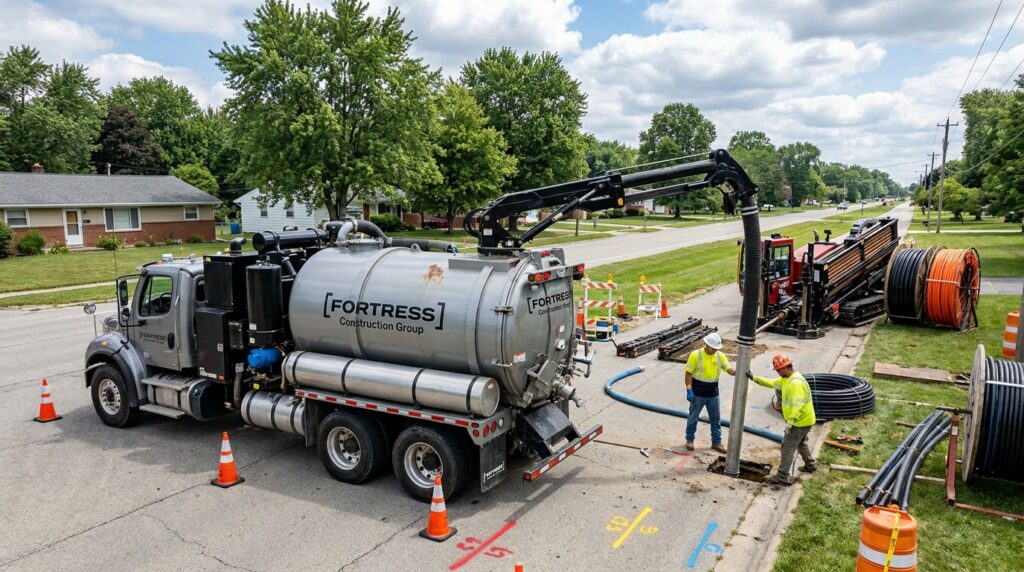
Water Tanks
Onboard tanks carry clean water for cutting soil. Many trucks can heat that water, which lets them dig frozen ground in winter.
High-Pressure Pump and Wand
A pump feeds water to a handheld wand. The operator directs the stream to cut and loosen soil, using nozzles that control how focused or spread the water is.
Vacuum System
A blower creates strong suction through a large hose. Positive displacement blowers are common because they produce deep vacuum for lifting heavy, wet material. Filters and separators protect the blower from water and debris.
Boom and Suction Hose
A powered boom positions the hose over the excavation, so the truck can reach holes away from where it is parked.
Debris Tank
The slurry collects in a sealed debris tank. When full, the tank is emptied at an approved disposal site by opening a rear door and tilting the tank.
How a Hydrovac Truck Digs, Step by Step
- The crew confirms 811 locates [1] and sets up traffic control and the work zone.
- The operator cuts soil with the water wand while a second worker guides the suction hose.
- Loosened soil and water are vacuumed into the debris tank as digging continues.
- Once the utility is exposed, the crew records depth and position.
- The hole is backfilled to the specification, and spoils go to an approved disposal facility.
Why Hydro Excavation Is Safer Around Utilities
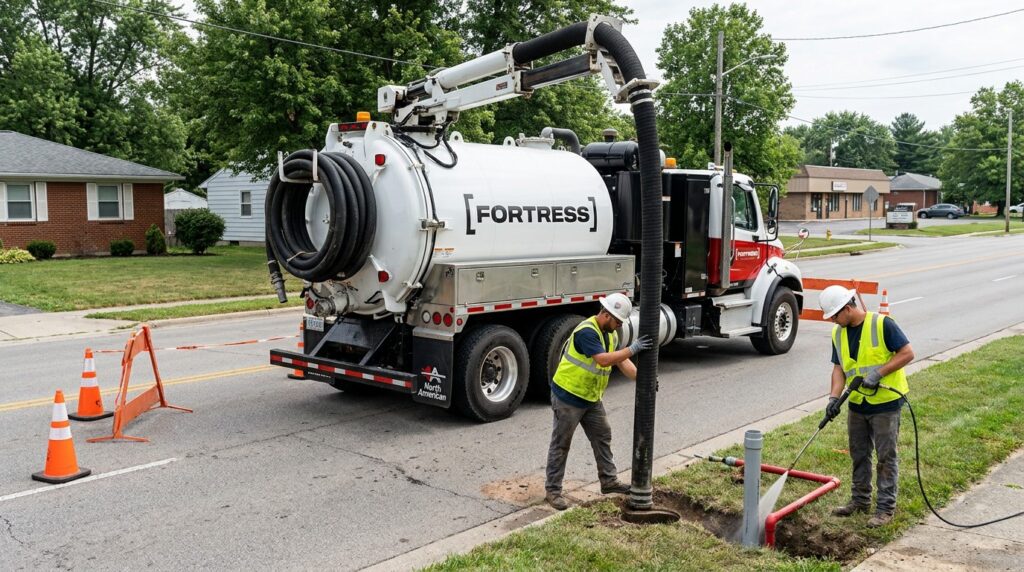
Water and suction remove soil without the force of a steel bucket, so the risk of damaging a gas line, power cable or fiber is much lower. This makes the suction excavator the standard tool for soft digging inside the tolerance zone around marked lines. OSHA’s excavation rules [2] and the Common Ground Alliance’s [3] best practices both stress careful exposure of underground installations.
Common Uses
- Potholing and daylighting utilities to confirm exact depth.
- Exploratory excavation before boring or trenching.
- Hydrovac trenching: narrow slot trenches for cable or pipe in congested areas.
- Holes for poles, signs and fence posts near buried lines.
- Excavation in frozen ground using heated water.
Hydrovac Truck vs Traditional Digging
Mechanical excavators move large volumes quickly in open ground. A the truck is slower per cubic yard but far safer near utilities and more precise in tight spaces. Many projects use both: a hydro excavation unit to expose lines, then mechanical digging away from them. Our comparison covers the trade-offs in detail.
What Drives Hydrovac Rates
Hydrovac work is usually priced by the hour, with other charges depending on the job:
- Travel to and from the site, and minimum billable hours.
- Soil conditions: dense clay and frozen ground take longer.
- Disposal fees for slurry and spoils.
- Water use and cold-weather heating.
- Traffic control, permits and standby time.
How Soil Affects Hydro Excavation
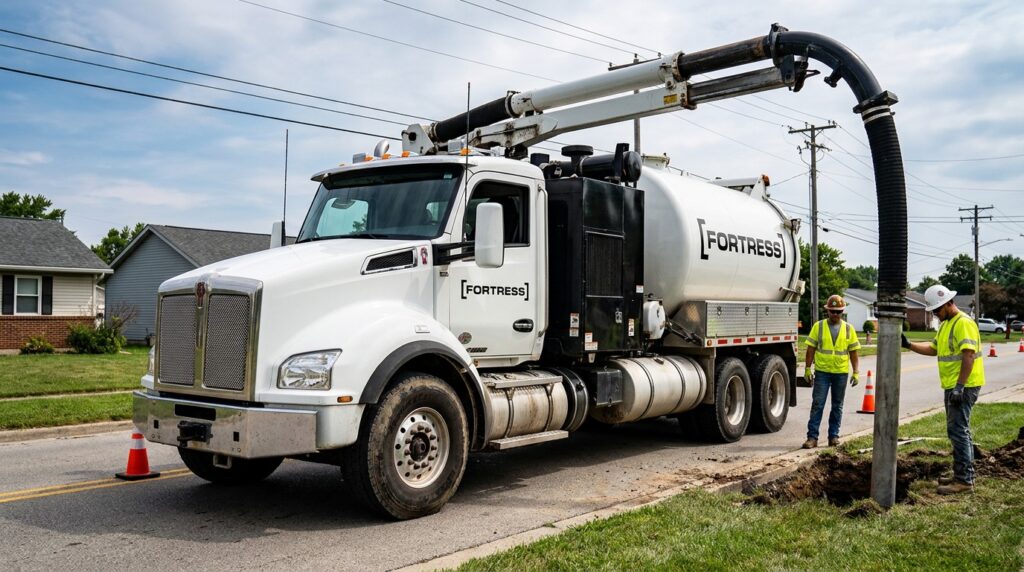
Sand and loam cut quickly and vacuum easily. Dense clay takes longer to break up and can clog hoses if not managed. Gravel and cobbles need more care to avoid blockages, and frozen ground needs heated water and more time. A vacuum excavator truck crew adjusts water pressure, nozzle choice and pace to the soil, which is why soil type is one of the biggest factors in how long a job takes.
Truck Sizes and Configurations
suction excavators range from compact units built for tight urban sites to large trucks with big debris tanks for long trenching runs. Smaller trucks maneuver easily but need to dump more often; larger trucks carry more water and spoils but need more space and access. Trailer-mounted vacuum excavators fill a niche for small jobs. Choosing the right size for the site keeps production steady.
Planning a Hydrovac Job
- Share the scope: number of holes, depths and the utilities involved.
- Confirm 811 tickets and any private locates in advance.
- Check access for a large truck and where it can park.
- Plan traffic control and any permits.
- Agree on backfill material and disposal arrangements.
Safety Around a Hydrovac Truck
High-pressure water can cause serious injury, so operators use proper PPE, keep the wand pointed into the excavation and never aim it at people. Crews also watch for overhead power lines when moving the boom and keep the work zone clear.
Working With Fortress Underground
Fortress Underground operates hydrovac services across Ohio, Kentucky, Illinois, Indiana and Wisconsin. Request a the truck for your project at contact us.
FAQs
What does a hydrovac truck do?
It uses pressurized water to loosen soil and a vacuum to remove it, exposing buried utilities safely.
Is hydro excavation the same as vacuum excavation?
Hydro excavation is a type of vacuum excavation that uses water. Air vacuum excavation uses compressed air instead.
Can hydrovac trucks dig in winter?
Yes. Heated water lets them work in frozen ground.
Where does the slurry go?
To an approved disposal or processing facility, following local rules.
How are hydrovac rates calculated?
Usually by the hour, with travel, disposal, minimum hours and site conditions affecting the total.